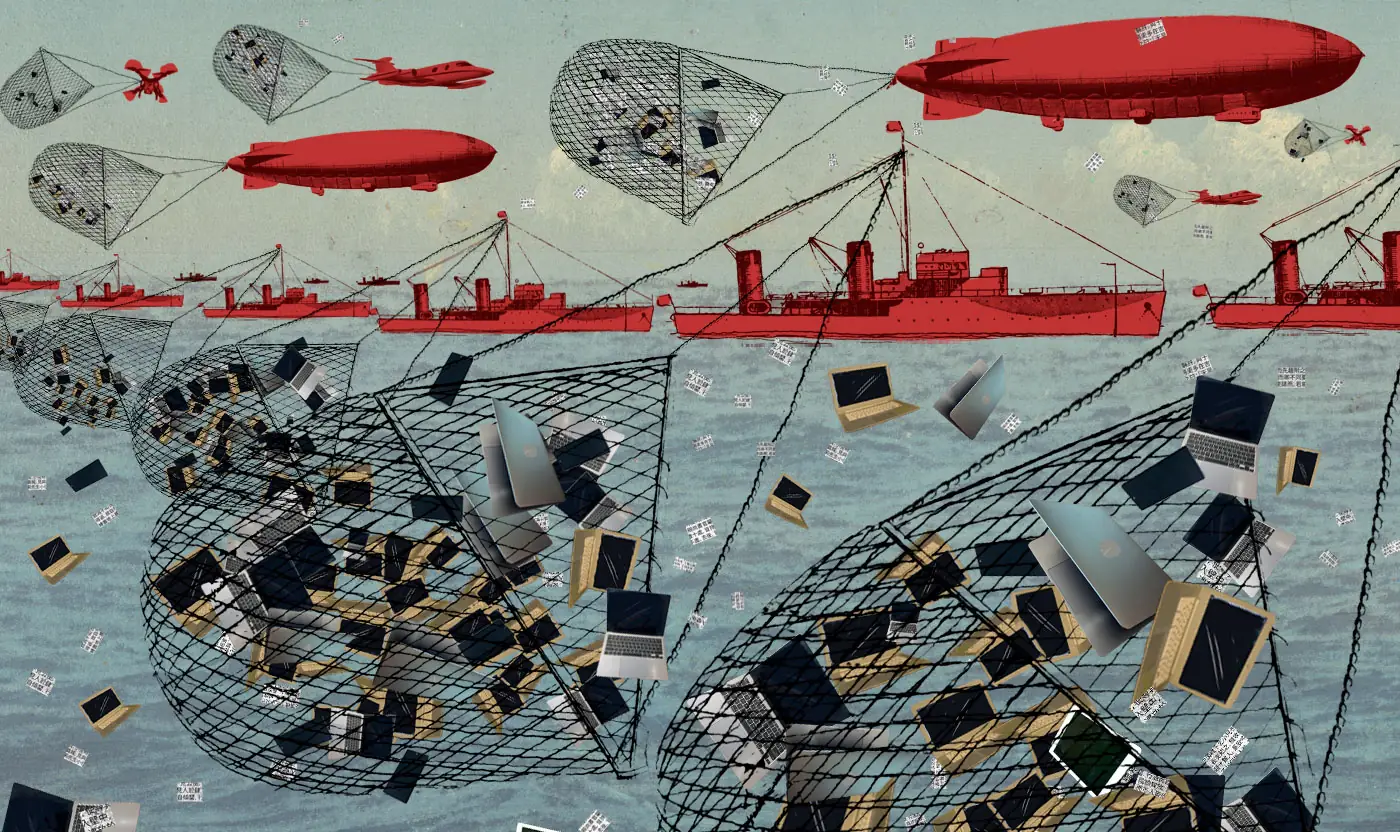

The Locknet
How China Controls Its Internet and Why It Matters
China, its companies, and its citizens play a major role in the global internet: producing infrastructure, services, and content upon which people around the world depend. Yet, China’s extensive online censorship system remains poorly understood by most of the internet’s users, and the ways it alters both the physical and digital architecture of the internet are too often overlooked.
Originally published on ChinaFile.
In this project · 14 parts
The Locknet
-
Main Article
Despite its increasing impact on our online lives, most people outside China don’t understand how this information control system really works. What does it consist of? How effective is it? What is its ultimate purpose? And how much does it alter the internet in the rest of the world?
-
I. Meatspace: The Locknet IRL
Though cyberspace may seem ephemeral and immaterial, it is inherently tied to “meatspace”—the offline, embodied world in which we all live and breathe.
-
II. Service-Level Censorship: The Corporate Locknet
The much-vaunted “Great Firewall” looms large in the imagination, but much of what an average person in China sees or sends online will never come into contact with it.
-
III. Network-Level Censorship: Locknet in the Wires
China’s day-to-day control mechanisms function as more than simple on-off switches—they often hijack the internet’s normal functions and turn them against themselves.
-
IV. Evading the Locknet
China’s continued efforts to hunt down and block new circumvention tools show just how threatening the censors believe unfettered internet access can be.
-
V. The Locknet Leaks Out
The effects of the censorship regime can and do ripple outwards into the broader world, because the Locknet was designed to be compatible with the global internet.
-
VI. The Future of the Locknet
The continued functioning of the Locknet remains existential for the Chinese Communist Party—it’s a must-have, not a nice-to-have.